Among the Akbari et al. dataset, there is a previously unreported individual (Sample IID: I41584/I41584_preQC) potentially from Anatolia. His terminal Y-DNA subclade is Y148982/Y106006 (TMRCA ~3100 BCE according to FTDNA), a lineage that also includes most modern West Asian and Near Eastern V1636 samples. His maternal haplogroup is HV29d1, also according to FTDNA.
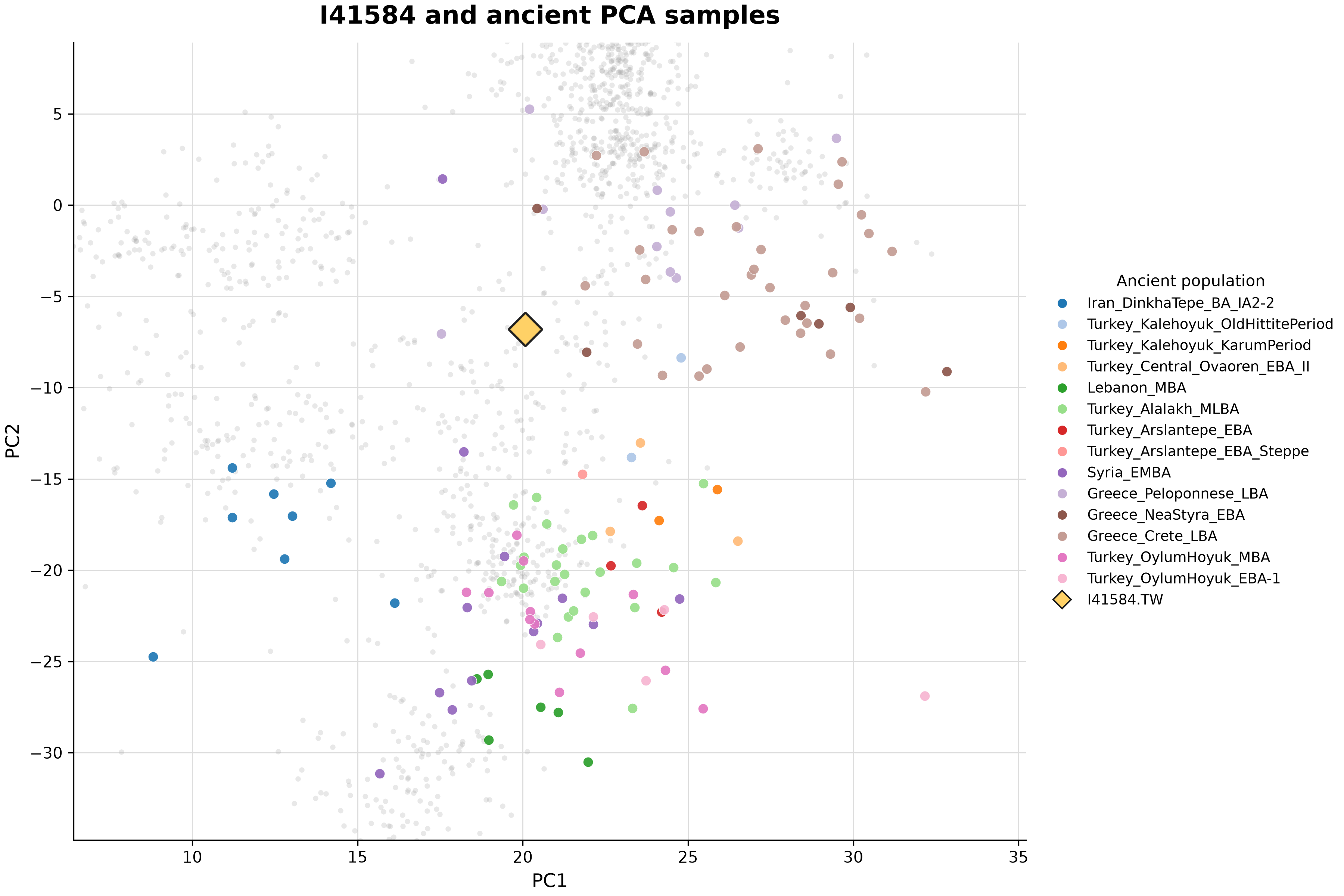
The genotype PCA makes it look as if the closest ancient groups to this sample are Bronze Age Aegean groups, however, the same is the case for one of the Old Hittite samples from Kaman. Against all the coloured ancient samples of this PCA across all generated PCs make this unreleased sample closest to an Ovaören individual, though, still notably distant followed by Aegean samples.
Since a genotype PCA is not very useful for assessing genetic affinity and ancestry modelling, I also did an f4-based compatibility ranking. In this analysis, the sample shows a distinctly Bronze Age Anatolian affinity:
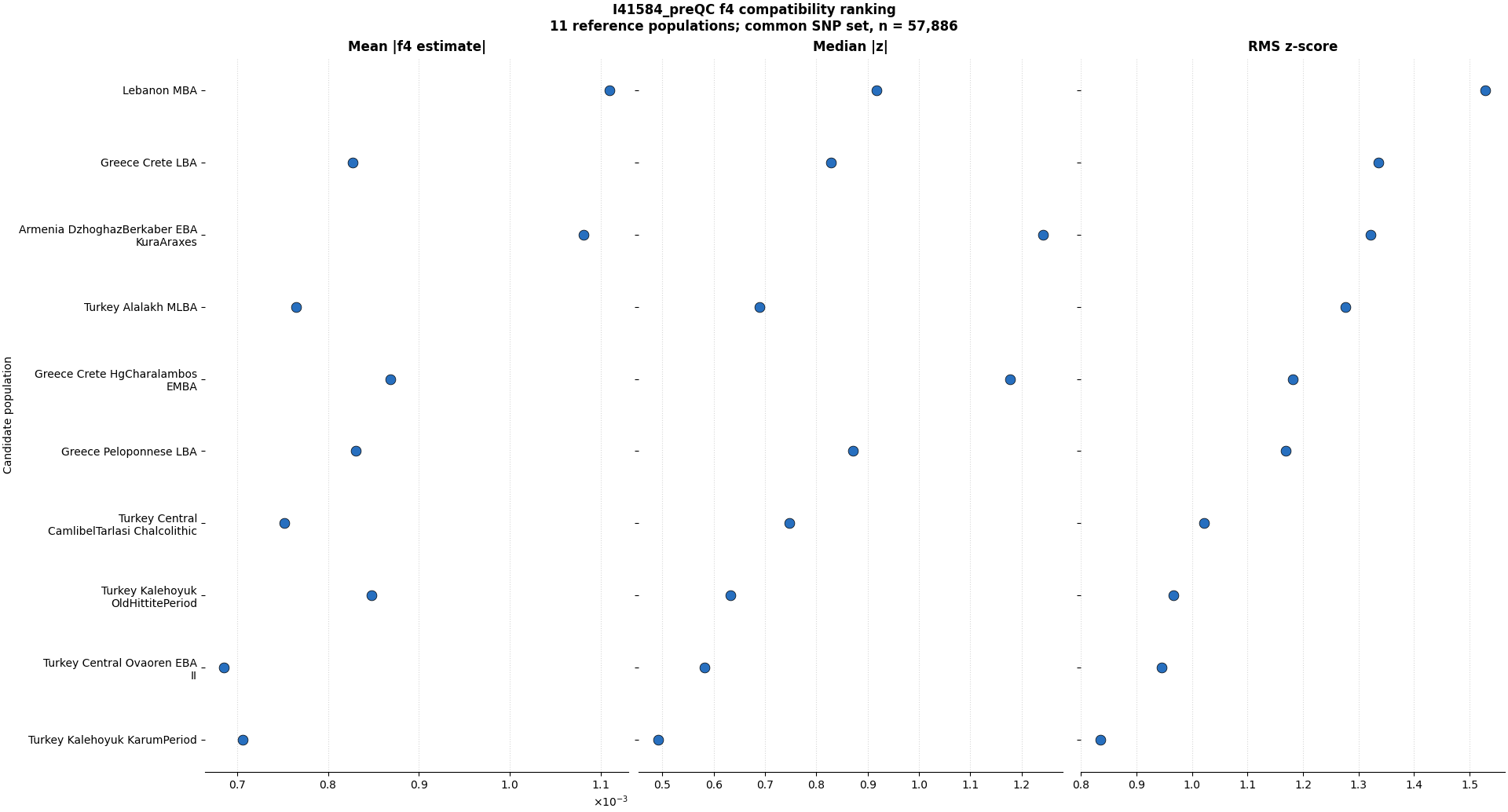
The sample was tested against 11 ancient diverse and relevant reference populations using the 57,886 SNPs shared across all candidate groups. The closest match is Karum-period Kaman, followed by Bronze Age Ovaören and then Old Hittite Kaman.
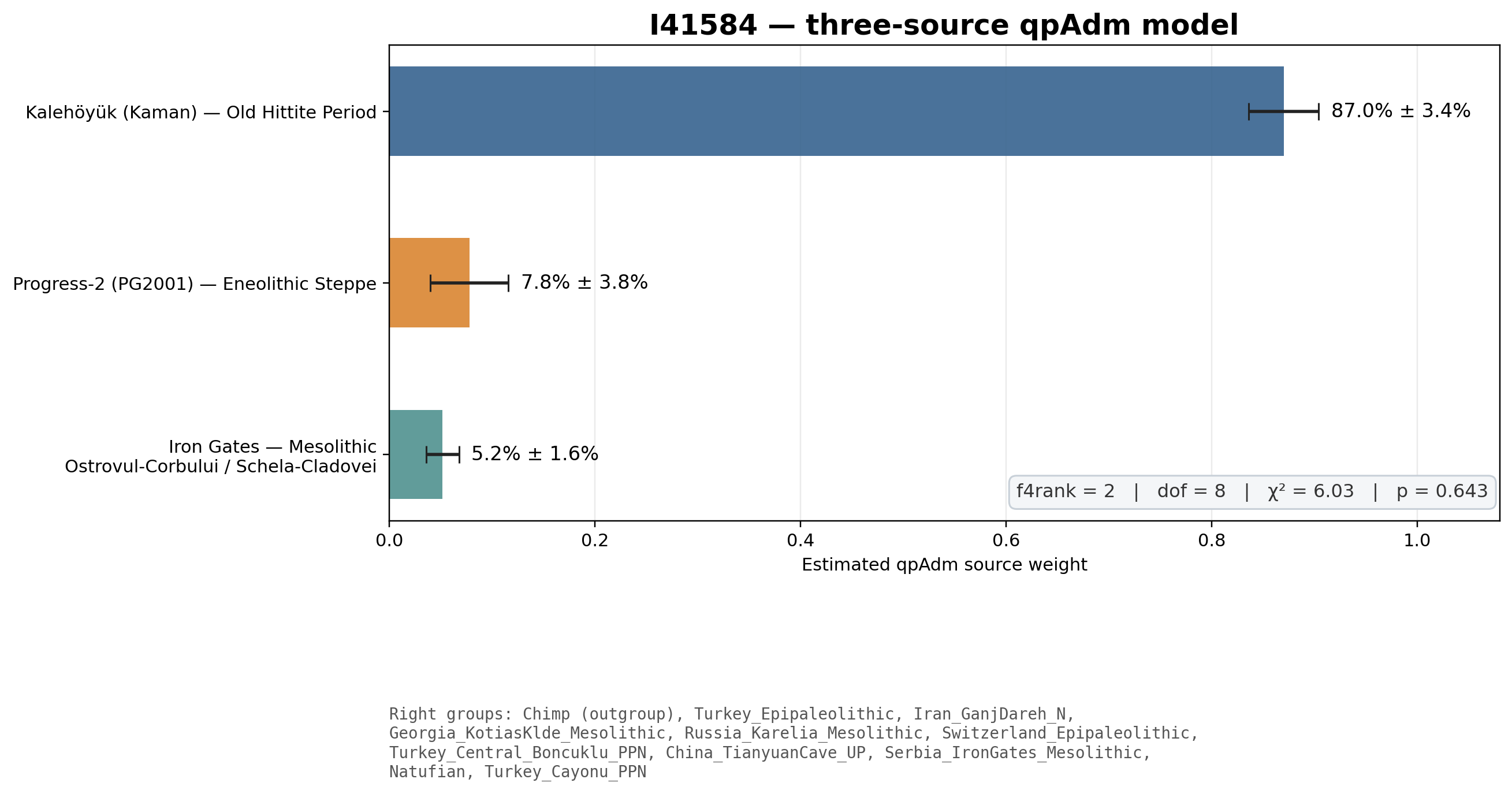
With qpAdm, the sample can be successfully modelled as 87.0 ± 3.4% Old Hittite Kaman, 7.8 ± 3.8% Progress-2 Eneolithic Steppe, and 5.2 ± 1.6% Iron Gates Mesolithic. Dropping Progress-2 within this set-up makes the model still pass with a p-value of 0.34 (chisq 10.13).
Replacing the Kaman Old Hittite-period main source with the Karum-period group still produces a passing model, but with slightly worse fit metrics. Replacing the Bronze Age Anatolian core source with Aegean proxies, makes the model fail within the same set-up.
I41584 can also be modelled successfully with a single antiquity/medieval Anatolian source, with a similar fit. Later-period Anatolian references also tend to outperform the closest Bronze Age groups in the subsequent f4 compatibility rankings I did.
But even if the sample is from a later period, its profile still appears to be predominantly derived from Bronze Age Anatolians, which would make an earlier presence of the lineage among preceding Anatolian speaking groups likely. The lineage itself is already attested in Chalcolithic Arslantepe, indicating that its presence in Anatolia long predates historical periods.
See also: The Genetic Origins of the Proto-Anatolians
Note: The supplementary table lists I41584 with a date mean of 800 BP. The individual is therefore medieval, not Bronze Age. But the ancestry described above remains unchanged.