Ust-Ishim is a sample identified from only a femur bone pulled out of eroding sand on the banks of the Irtysh River in western Siberia in 2008. Later analysis established that the bone belonged to a man estimated to have lived around 45,000 years ago. His genome is one of the earliest Upper Paleolithic WGS genomes.
Neither Clearly East- nor West Eurasian
What makes this sample particularly interesting is that he does not fall clearly into either the East or West Eurasian category. The initial Fu et al. study placed him before, or approximately at, the separation of subsequent eastern and western Eurasian populations, which include all modern Eurasian populations. Later graph modelling reached essentially the same conclusion; the best fit placed Ust-Ishim slightly towards the West Eurasian branch, but the uncertainty overlapped the East-West split.
This can also be tested with -statistics:
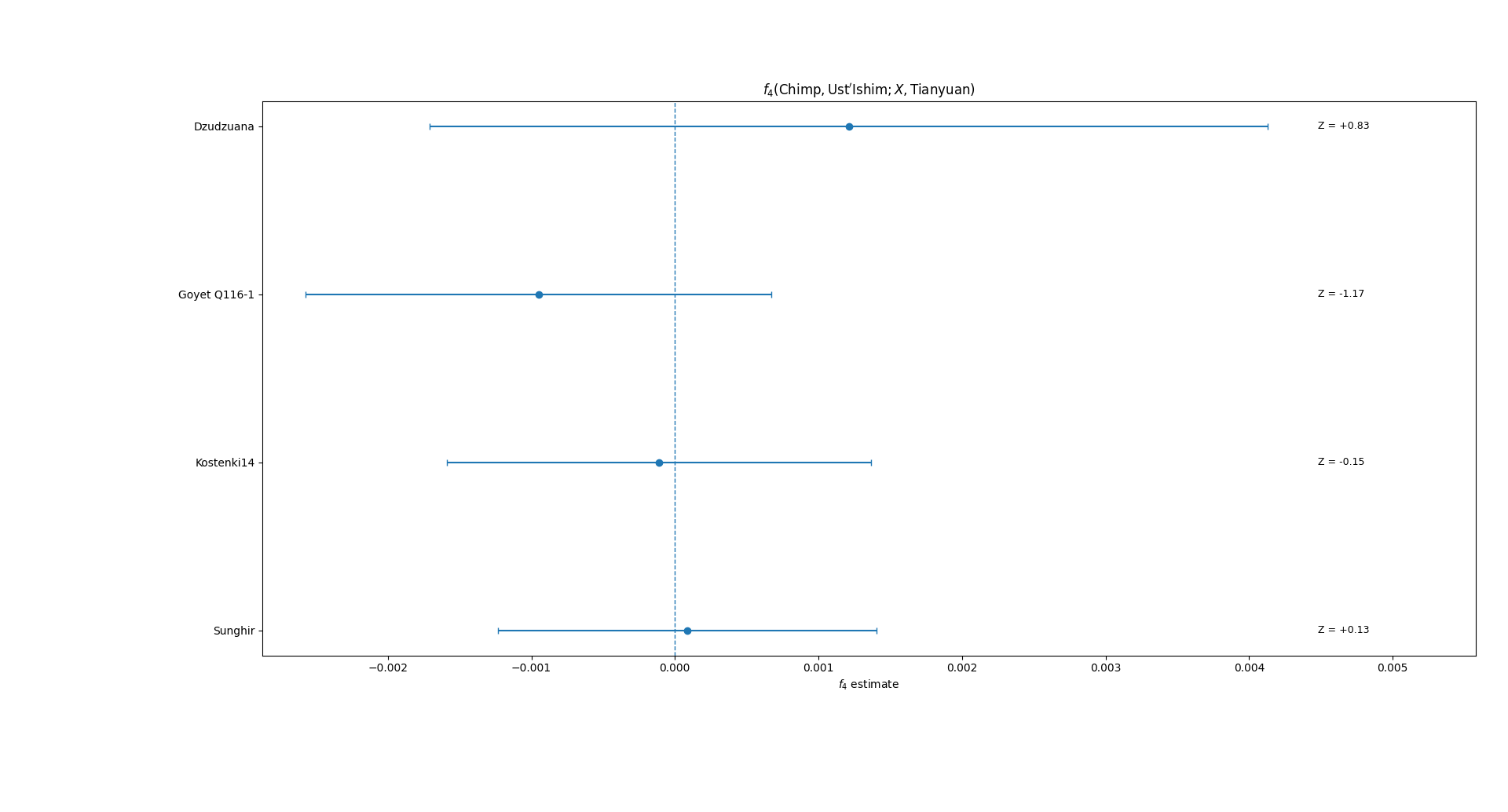
These tests show no significant excess affinity between Ust-Ishim and either Tianyuan or several Upper Paleolithic West Eurasian groups.
Shared Drift Between Ust-Ishim and Modern Populations
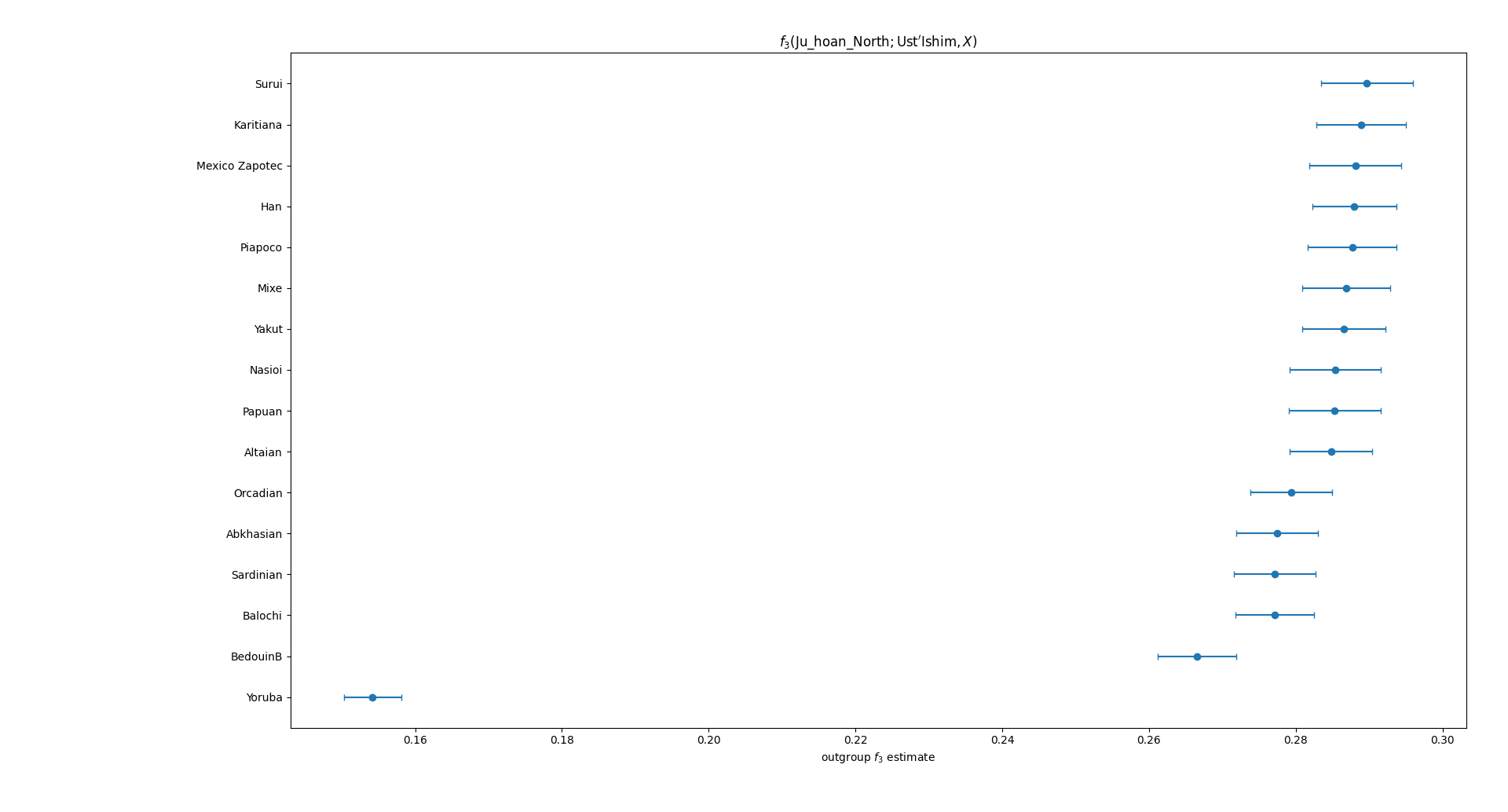
In an outgroup -statistic test, Native Southern American groups like Surui and Karitiana share the most drift with Ust-Ishim out of the modern populations shown.
Does Ancient North Eurasian Ancestry Explain the Affinity?
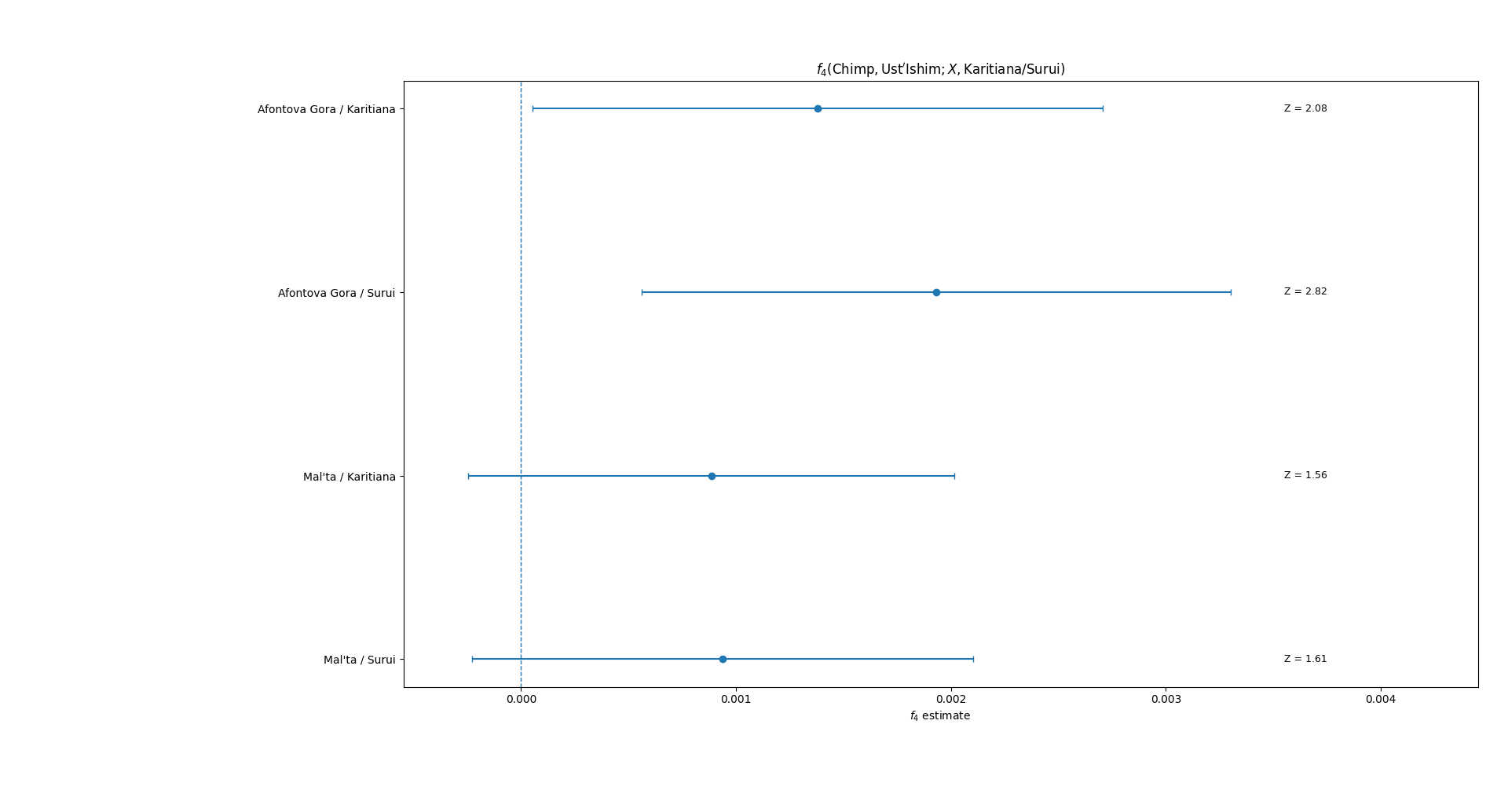
Using Mal’ta and Afontova Gora as references indicates that these two ANE-related groups cannot fully explain the excess affinity between Ust-Ishim with Surui and Karitiana. While these -statistics fall below the threshold used in some ancient-DNA studies, they point in the same direction and corroborate the affinity.
Replacing the ANE references with the previous groups, Kostenki, Tianyuan, and Sunghir, results in significant deviations even under this stricter threshold.